
Health Library / Lifestyle
This content is for education only and is not medical advice. I'm a fitness coach, not a physician. Talk to your doctor before starting any medication, hormone, supplement, or new exercise program, especially if you have a medical condition or take prescriptions.
Gut health became a marketing category somewhere around 2015 and it's been downhill since. There's real science underneath it. There's also a lot of expensive powder.
Let me separate them.
You're carrying trillions of microorganisms, mostly in your large intestine, and collectively they do real work — they ferment fiber you can't digest, produce compounds your gut lining depends on, participate in immune function, and make certain vitamins.
People with different gut compositions differ in health outcomes. That's been observed repeatedly.
What's much less clear is the direction. Does the microbiome make people healthy, or do healthy people's habits produce that microbiome? Both, probably, in a loop. But the marketing sells you the first version as settled when the field is still working it out. Anyone telling you they can fix your health by fixing your microbiome is selling ahead of the science.
There's genuinely exciting research here. It is not yet a set of reliable instructions.
Here's the thing the supplement industry would rather you didn't focus on, because it's cheap and boring.
Most Americans eat around 15 grams of fiber a day. The recommendation is roughly 25 to 38 depending on who you are. So the typical person is running at about half, and this is the single largest dietary gap in the country outside of vegetables generally.
Fiber is what your gut bacteria eat. Feed them properly and they produce short-chain fatty acids that nourish the cells lining your colon. Starve them and — this is the part that stuck with me — some of them start consuming the mucus layer that protects your gut wall instead. They eat what's available.
Fiber also slows glucose absorption, which blunts the spike from a meal. Binds cholesterol. Keeps you full, which makes eating less considerably easier. It's doing four jobs at once.
Where it comes from: beans and lentils, which are far and away the best source and the most neglected. Vegetables. Fruit, skin included. Whole grains. Nuts and seeds.
Two practical notes. Increase it gradually, because going from 15 grams to 40 overnight will make you miserable and you'll blame the wrong thing. And drink more water as you do, or you'll get the opposite of what you wanted.
This one has a nice piece of evidence behind it. A controlled trial compared increasing fiber against increasing fermented foods, and the fermented food group showed increased microbiome diversity and a reduction in markers of inflammation. That's a stronger result than most of this field produces.
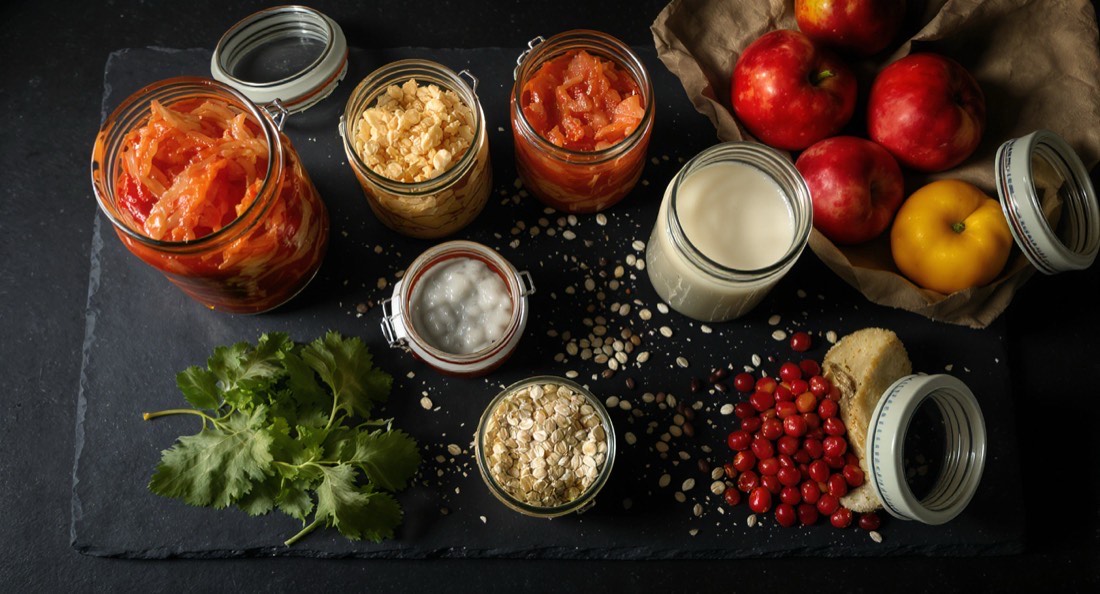
Yogurt with live cultures, kefir, kimchi, sauerkraut, miso, kombucha. The sauerkraut has to be the refrigerated kind with live cultures — the shelf-stable jar has been pasteurized and the organisms are dead.
Small amounts regularly beat a large amount occasionally. A few spoonfuls alongside dinner is the whole intervention.
The supplement version is where I'd temper expectations.
The evidence is strain-specific. Particular strains have been shown to help with particular conditions — certain kinds of diarrhea, some IBS symptoms, a few other specific situations. That's real and if your doctor recommends one for a reason, take it.
What's not supported is the general case: that a healthy person taking a broad-spectrum probiotic gets meaningfully healthier. Most of what's sold doesn't have evidence behind that specific product, and "50 billion CFU" on the label is a number, not a result. More strains and bigger numbers don't mean better.
Also worth knowing that survival through stomach acid varies, and what actually takes up residence versus passes through is not well characterized for most products.
My read: if you want to spend money on your gut, spend it on beans and yogurt. If you've got a specific diagnosed issue, that's a doctor conversation and a specific strain, not the biggest bottle on the shelf.
Persistent changes in bowel habits, blood, unexplained weight loss, ongoing pain, or anything that's new and not going away — that's a doctor, not more fiber. Some of those symptoms have serious causes, and the age group reading this is the age group screening starts to matter for.
If you're over 45 and you haven't discussed colorectal cancer screening, do that. It's the most useful gut health intervention in this entire module.
Last updated September 30, 2026