
Health Library / Lifestyle
This content is for education only and is not medical advice. I'm a fitness coach, not a physician. Talk to your doctor before starting any medication, hormone, supplement, or new exercise program, especially if you have a medical condition or take prescriptions.
High blood pressure has no symptoms. That's the entire problem with it.
You can walk around for fifteen years with a number that's quietly damaging your arteries, your kidneys and your heart, and feel completely fine the whole time. A large share of people who have it don't know. Plenty of people who know have it aren't controlling it.
If you're over 45 and you can't tell me your blood pressure from the last six months, that's the first assignment in this module.
Regular training lowers resting blood pressure. Both aerobic work and resistance training do it, and the reductions in trials are meaningful enough to matter clinically — for some people it's comparable to what a first medication would achieve, though I'm not suggesting anyone treat it as a substitute for one.
The mechanisms stack up: vessels get better at dilating, the heart pumps more efficiently so it does the same work at a lower rate, and training tends to drag body fat and stress in the right direction too.
It also improves your lipid picture, particularly triglycerides and HDL, and it improves how your body handles blood sugar, which feeds back into the whole cardiovascular picture.
There's one thing I want to be clear about. Being fit does not make you immune. Fit people have heart attacks. Runners have heart attacks. If you have a family history, or your numbers are off, exercise is part of your plan and not a replacement for the rest of it.
When you lift something heavy, your blood pressure spikes during the effort. Sharply. That's normal physiology — it happens to everyone, it's brief, and it comes back down between sets.
It goes up further when you hold your breath and strain, which is what naturally happens under a heavy load. That's the Valsalva maneuver. It's not a mistake — it stabilizes your trunk and experienced lifters do it deliberately — but it drives the acute pressure higher, and it's why some people see stars on a heavy set.
For a healthy person with controlled blood pressure, this is fine. Your vessels handle it, the spike is temporary, and the long-term effect of training is to lower your resting number.
If your blood pressure is uncontrolled, the calculation changes. Starting from an already-high baseline and adding a large acute spike is a different proposition, and it's the situation where caution is genuinely warranted.
Not "don't lift." Lifting is part of the answer. But get this sorted first:
See your doctor and get it properly assessed and controlled. One reading at a pharmacy isn't a diagnosis. Repeated measurements, sometimes a home monitor or a 24-hour one, and a plan.
Ask specifically about resistance training. Say you intend to lift weights and ask what restrictions apply to you. A general "exercise is good for you" isn't the answer you need. Some people get told to avoid maximal efforts until things are controlled; some get no restriction at all. It depends on your numbers and your other risks, and your doctor has both.
In the meantime, moderate it. Lighter loads with more repetitions produce a smaller pressure spike than near-maximal efforts. Breathe through the reps rather than holding your breath. Skip the grinding single. Avoid the positions that add pressure on their own, like being upside down or fully overhead, until you're cleared.
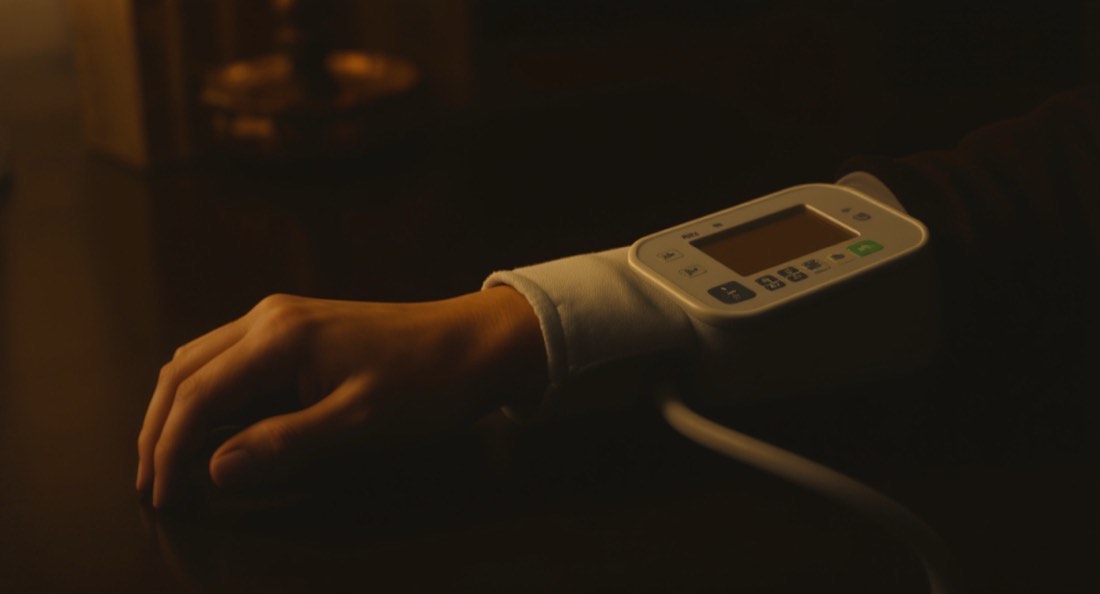
Get a home monitor. They're inexpensive, and knowing your own trend is worth more than a reading taken at the doctor's office while you're mildly stressed about being at the doctor's office.
Chest pain or pressure. Dizziness or feeling faint. Shortness of breath that doesn't match the effort. A pounding or irregular heartbeat that doesn't settle. A severe headache during exertion.
Stop. Don't finish the set. If it's chest pain or pressure, that's emergency services, not a phone call in the morning and not driving yourself.
Nobody has ever regretted stopping a set early.
Your heart is the most trainable organ you have and the one you'll notice least until something goes wrong. Know your number, train regularly, and if that number's high, get it handled before you go chasing a personal best.
Last updated September 30, 2026