
Health Library / Lifestyle
This content is for education only and is not medical advice. I'm a fitness coach, not a physician. Talk to your doctor before starting any medication, hormone, supplement, or new exercise program, especially if you have a medical condition or take prescriptions.
We live at a latitude where the UV index hits levels the mainland sees a few weeks a year, and it does it most of the year. Training outside here is one of the best things about living here and it's a genuine occupational hazard for your skin.
The trade-off people think they're making — sun for vitamin D — is mostly not the trade-off they're actually making. Let me explain why.
Closer to the equator, the sun passes through less atmosphere, so more UV reaches you. Add altitude if you're training up-country, and add water and light sand, which reflect UV back at you from below — which is why people burn under a hat on the water.
Cloud cover is the trap. A significant amount of UV passes through cloud, so the overcast morning that felt mild is still doing the work. Most people's worst burns here happen on days that didn't feel hot.
And UV is highest in the middle of the day, which for a lot of people is exactly when they can train.
The reasoning goes: I need vitamin D, sun makes vitamin D, therefore sun exposure is health maintenance.
Here's where it falls apart in practice. The amount of sun that produces vitamin D is genuinely small — and it varies enormously with your skin tone, your age, how much skin is exposed and the time of day. Older skin produces less vitamin D from the same exposure, which matters directly for this audience.
Meanwhile UV damage accumulates over your whole life and doesn't care that your intent was vitamin D.
And here's the part that surprises people: plenty of Hawaii residents are vitamin D deficient anyway. Indoor work, sensible sun avoidance, covering up. Living somewhere sunny does not guarantee your level.
So the sensible version: test it. A blood test tells you where you actually are. If you're low, that's a conversation about supplementing, which is cheap, reliable and doesn't age your skin. You cannot determine your vitamin D status by thinking about how much sun you get.
Timing. Train early or late. The same session at 7am and 1pm are different exposures, and the early one is usually a better session anyway because of the heat.
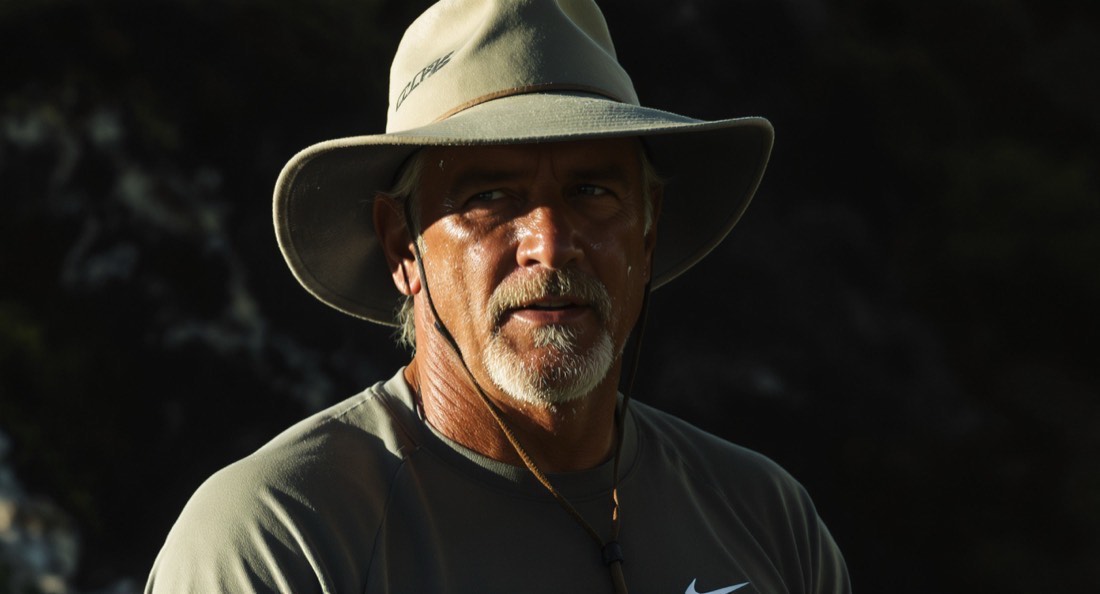
Clothing beats sunscreen for anything sustained. UPF-rated shirts, long sleeves in light technical fabric, a real brimmed hat rather than a cap that leaves your ears and neck out. Clothing doesn't sweat off, doesn't need reapplying, and doesn't get missed in patches.
Sunglasses, which people forget. UV causes cataracts and damages the tissue around the eyes, and that skin is thin and commonly missed.
Sunscreen properly used, which almost nobody does — most people apply well under the amount tested, and applying half as much gets you far less than half the protection. Reapplication after swimming and heavy sweating matters more than the SPF number on the bottle.
Note for here specifically: Hawaii restricted sunscreens containing oxybenzone and octinoxate over reef concerns. Mineral sunscreens — zinc oxide and titanium dioxide — are the common alternative, they work well, and the newer formulations are much better than the white paste era.
Do it a few times a year, with someone else or a mirror for your back.
The pattern worth knowing: asymmetry, irregular border, uneven or multiple colours, larger size, and above all evolution — anything changing in size, shape, colour or sensation. A changing spot matters more than an odd-looking one that's been the same for a decade.
Check the places that get missed: scalp and hairline, ears, back of the neck, tops of feet, between toes, under toenails. Outdoor athletes get lesions in exactly the places their gear doesn't cover.
Anything new, changing, growing, bleeding or not healing goes to a doctor. Not next year. Skin cancer is extraordinarily survivable caught early.
I'm not telling you to stay indoors. Training outside here is one of the reasons to live here, the sunrise walk is genuinely good for your circadian rhythm and your mood, and being outdoors is bound up with most of what this library recommends.
What I'm telling you is that "getting sun for vitamin D" is a story people tell themselves that mostly doesn't hold up — you can test your level and supplement if needed, and the sun exposure question is separate.
Cover up, train early, wear the hat, check your skin, and enjoy where you live.
Last updated September 30, 2026