
Health Library / Training
This content is for education only and is not medical advice. I'm a fitness coach, not a physician. Talk to your doctor before starting any medication, hormone, supplement, or new exercise program, especially if you have a medical condition or take prescriptions.
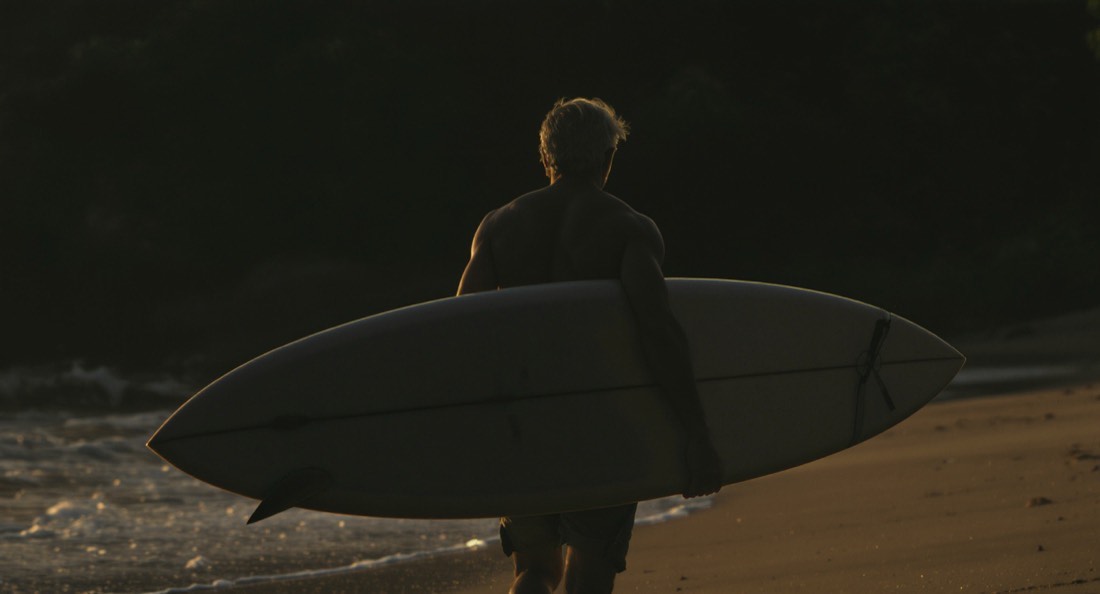
The guy who taught me the most about training after 50 was a 63-year-old who surfed four mornings a week and couldn't get off the floor without putting a hand down.
That's the pattern here. People who live in the water assume the water is their training. It's excellent for some things and leaves enormous holes in others, and the holes are the ones that determine whether you're still paddling out at 70.
Mostly paddling, which is a lot of shoulder — internal rotation, over and over, for hours. Then short bursts of explosive power at the pop-up. Then a great deal of isometric holding and balance.
What it isn't: anything that loads your legs or hips heavily, anything that builds bone in your spine or hips, and anything that trains the muscles on the
back of your shoulder.
Paddling is internal rotation dominant. So is swimming. So is everything else most people do.
Over years that produces a shoulder that's strong in one direction, tight at the front, with a shoulder blade that sits differently and a rotator cuff that can't keep up. Then one paddle-out too many and something's irritated for eight months.
This is the single most preventable thing in the water-sports population over 45, and the fix is boring: pull more than you press, and train external rotation. Rows in several directions, face pulls, band external rotations. Read the shoulder module — it's the same argument and it applies here harder, because paddling is a high-volume internally-rotated activity you do for pleasure.
Two minutes of band work twice a week is not glamorous. It's the difference between surfing at 65 and having surfed.
Legs and hips. Paddling does nothing for them. Squats, hinges, split squats, step-ups. This is also the pop-up: the pop-up is a power movement off the floor, and power is the first quality to go with age. If the pop-up is what's getting slower, train power — not more paddling.
Bone. Water sports are non-impact, which is lovely for joints and useless for bone density. Swimmers and surfers can have lower bone density than you'd expect for how active they are. Read the bone module: loading and impact are what build bone, and if the ocean is your only activity you have a gap. That matters more for women post-menopause and it matters for anyone who falls off things.
Getting off the floor. The thing my 63-year-old couldn't do. Deep hip and ankle mobility, and the strength to stand up from the ground unassisted. It's the most functionally important thing on this list and the easiest to neglect when you're strong in the water.
Thoracic mobility. Hours lying prone and arched on a board, plus a stiff mid-back, plus overhead demands — that combination puts the load in the wrong place.
Surfing is intermittent — paddle hard, wait, paddle hard. That builds a specific kind of fitness and leaves your aerobic base underdeveloped unless you're on it constantly.
The VO2 max argument in the cardio module applies. Add some Zone 2 that isn't paddling, and one harder session a week.
Not surf advice — you know the water better than I do. Cardiovascular reality.
Cold-water immersion causes a sharp gasp reflex, a spike in blood pressure and a jump in cardiac demand in the first seconds. That's a meaningful stressor and it's the riskiest moment for anyone with undiagnosed heart disease. Winter water here isn't cold by mainland standards, but the response is real anywhere there's a temperature gap.
Exertion in the water is where a cardiac event is least survivable. Not to frighten you — to make the case for taking symptoms seriously rather than paddling through them. Chest pressure, unusual breathlessness, dizziness or a racing irregular heartbeat means get checked, on land, before your next session.
Don't go alone with a new symptom. Ever.
And the ordinary things that matter more with age: sun exposure — read the skin module, this is the highest-exposure activity in this library — hydration before a long session, and honest assessment of conditions on a day you're tired.
The water keeps you honest and it keeps you happy, and it is not a complete training program.
Lift twice a week. Pull more than you press. Train your legs and your power off the floor. Get some impact in for your bones.
Then go surf for another twenty years.
Last updated September 30, 2026